FCN Blog

Fresh produce from Fresh Start Produce Company

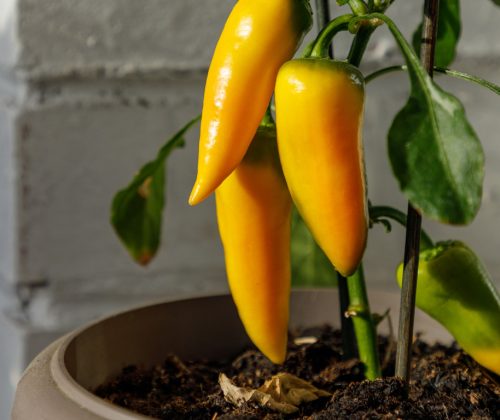
Fresh Start Produce Co.Starting Friday, June 7, 2013, the fine folks from Fresh Start Produce Company will be vending the finest fresh produce at Fort Collins Nursery. From peppers, corn, and arugula to blueberries, lemons, and artichokes, you will find a wonderful array of delicious fruits and vegetables for sale.

Fresh Start boasts a wide variety of locally grown produce, as well as delightful treats from all over the United States. They provide both conventional as well as organic produce. They source food from farms statewide, so if there is something specific you are looking for, please let them know!

Fresh Start will be here on Fridays, Saturdays and Sundays through summer. They accept cash and credit cards.

For more photographs, check out our photo album on facebook!

A Study in Snow: What I learned on May 1st

By Jesse Eastman

SpringSnow2I set out to write an article about the benefits of this drenching spring snow, and as I sit here wishing for warmer weather and beautiful spring flowers, I simply can’t bring myself to do it. Sure, all this moisture will do wonders to slake the powerful thirst afflicting our soil, but if you stepped outside into the deep slush on May 1st you probably figured that out. Plants will explode following this snow, but that’s what happens when you water plants – they grow. You don’t need to be convinced of the importance of moisture in spring, especially in the midst of such an extended dry spell.

Instead, let’s talk about science, about botany, about averages, and common sense. To me, this snow is a perfect reminder about the fantastic ability of plants to adapt to an inconsistent world. Here on the Front Range, our last average frost date is May 15. That means that for all the years we don’t see frost any later than mid-April, there are many other years when a frost strikes well after that golden date. Despite this dramatic variation, plants still manage to thrive. They bloom, they produce seeds, they reproduce, and then, wonder of wonders, they do it again the next year.

You see, plants are incredibly versatile. They adjust to their conditions. In dry climates they might put down deeper roots to seek out limited moisture. If they receive less light than they are accustomed to, they consume less water. There is almost always more than one correct way to treat a pest problem, more than one proper way to nourish growth. On a practical level, there are very few exact answers in horticulture, and this is what makes it beautiful. If variety is the spice of life, Mother Nature brings the flavor. When we garden, we try our best to shape the natural world to meet our practical, aesthetic, emotional, and spiritual needs, and She does her best to surprise us.

If you’re anything like me, you’re ready to say goodbye to snow and hello to spring. You’re ready to plant tomatoes in the ground, hang up a hammock, and stop worrying about whether or not the peach trees will lose their summer crop to a late frost. A little consistency in spring weather would be a welcome comfort. On the other hand, can you imagine if every spring had identical weather? Human nature has some deeply ingrained desire for the thrill of uncertainty, a lust for surprise. So embrace the snow – it’s just a small part of what makes life interesting.

What to do about frost-damaged plants

Frozen Sedum

These succulent sedum leaves froze to the point that they can be snapped in half.

Did the recent cold snap leave some of the plants in your landscape looking a little haggard? If you purchased perennial plants that were already showing strong foliage growth or blooms, then the recent temperatures in the teens and single digits most likely left them looking wilted, discolored, or worse.

Don’t despair, though. While many plants took damage to their foliage and flowers, the temperatures just weren’t low enough for long enough to have caused major damage to the roots. Soil provides great insulation for roots – in fact, nearly all perennials, trees, and shrubs will have a higher probability of surviving a cold snap when planted in the ground than they will above the ground in a pot. When cold air is able to circulate around the root ball of a plant left in its pot, the soil temperature in the pot will drop much more rapidly than the in-ground soil temperature. If you haven’t had time to plant your perennials yet, moving them into a garage where temperatures might only drop into the 20′s instead of teens or single digits can improve the odds of survival.

While the foliage and blossoms on the Corsican Violet will not bounce back, the plant will produce new foliage and flowers as the weather warms.

While the foliage and blossoms on this Corsican Violet will not bounce back from frost damage, the plant will produce new foliage and flowers as the weather warms.

Even if your plants spent the last few days outside in their pots, it is highly likely they survived. We grow about 90% of the perennials we sell right here at Fort Collins Nursery, and we grow them in colder-than-normal conditions to ensure they are well acclimated to tolerate cold snaps exactly like the one we just experienced. On top of that, we specialize in hardy plants for northern Colorado and southern Wyoming, which means these plants are selected to be tough!

So what’s a gardener to do when the tops of their plants have been damaged by frost? The first step is to do nothing. That’s right, nothing. Wait for the plants to begin producing new growth. Once new growth has begun, you can asses the amount of top damage incurred. Using a sharp pair of pruners or shears, remove any foliage that is damaged, leaving healthy new growth alone. At most, cut the plants back so only 1″-2″ of foliage remain. The plant will continue to regenerate new growth as the temperatures rise. Be patient, though, as we are not expecting a rapid increase in temperature. You should see regrowth beginning in 2-3 weeks, although if warmer weather comes along, it could happen sooner. Treat your plants as though they were dormant – water them just enough to keep the roots from drying out, and increase watering as more foliage appears.

As always, if you have any major concerns about your plants, call us! All our hardy perennials, trees, and shrubs are guaranteed for 1 year from the date of purchase, and we encourage you to wait for warmer weather to awaken your plants. Don’t pull them out of the ground right away, as it is likely they have survived and have just ducked their heads back down to dodge this dodgy weather.

Gardening with water restrictions: Water you to do?

dry-river

Restrictions: What are they, and what do they mean?

The City of Fort Collins has declared a Level 1 water restriction. If you do not get your water from the City of Fort Collins, you may or may not be subject to restrictions. However, in such a dry year as this, we strongly encourage everyone to reduce water use. What does that mean for you?

  • Watering flowers, trees, shrubs and vegetable gardens will not be restricted, but a hose shut-off nozzle is recommended.
  • Lawn watering will be allowed two days per week:
    • Even residential addresses: Thursday and Sunday
    • Odd residential addresses: Wednesday and Saturday
    • Commercial/businesses, multi-family and HOAs: Tuesday and Friday
  • Permits are available allowing exceptions to the restrictions for a variety of reasons, including:
    • New seed or sod for lawns: exempt from restrictions for three weeks for sod and four weeks for seed
    • Large properties with more than four acres: limit of one inch per week of water applied per zone
    • Well or raw water: use is not restricted, but signage is recommended; free signs are available

Thriving in spite of drought: What can you do?

Believe it or not, most landscapes are not watered properly when it comes to using the right amount of water. Often, plants are over-watered, causing shallow roots and weaker plants, or water is applied improperly, running off the soil and down the drain before it has time to soak into the ground.

Basic Xeriscape principles can help you reduce your water use and when applied properly, can allow you to have a truly lush and thriving yard, even with water restrictions. A common misconception about xeriscaping is the idea that it simply consists of gravel and cactus. In fact, it is not one specific style of landscaping. It is the comprehensive development of an attractive and healthy landscape that uses water efficiently.

The 7 principles of Xeriscape are:

  • Planning and Design
    Whether planning a new landscape or a new flower bed, consider things like the slope of the land, areas of the landscape that are naturally wet or dry, and which plants will grow best in various moisture zones.
  • Soil Improvements
    Soil should be amended to meet the needs of the plants you choose. Keep in mind that many native plants dislike heavily amended soil, whereas non-native plants may prefer rich well-amended soil.
  • Efficient Irrigation
    Choose irrigation systems that reduce evaporation such as drip emitters, low-pressure low-angle  lawn sprinkler, and other low pressure devices. Avoid watering devices that produce lots of mist.
  • Plant Zones
    Group plants with similar water, light, and soil needs into areas of your landscape that can meet those requirements. Place higher water-use plants in low-lying areas and areas where access is easy. This will reduce water waste and plants will thrive in their optimal environments.
  • Mulches
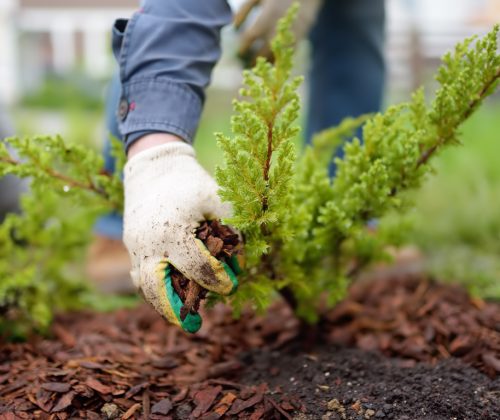
    Mulch can dramatically reduce evaporation while keeping plant roots cool and reducing weeds.
  • Turf Alternatives
    Although Kentucky Bluegrass is a popular lawn, it is also a very thirsty plant. To reduce water use on lawns, reduce the amount of Kentucky Bluegrass by choosing native grasses like Buffalo Grass and Blue Gramma, or choose blends that include turf-type tall and fine fescues.
  • Maintenance
    Like traditional landscape, Xeriscapes need to be maintained including weeding, fertilizing, pruning, and pest control. Maintenance will decrease over time.

For more information, including help selecting plants, irrigation, soil amendments, and more, stop in and see us!

Additional online resources:

Let It Fly & Flutter!

By Cortney Moore

I am a vexillophile. I almost can’t believe there is a word to describe my obsession. It all started when a friend from Chicago told me about flags and their popularity in the windy city. She showed me pictures and it was official.

I am in love with flags! And not just any flag, the garden flag.DSC02182

There are cute ones adorned with frogs in sunglasses sipping lemonade, colorful flip flops, bright cheery birds tweeting “Celebrate the Day!” or a bright motif simply stating “Live Happy!”.

Whichever strikes my fancy I will be buying lots of them, one for each season and more when they fade. Rain boots with ladybugs, popsicles screaming summertime, hummingbirds and dragonflies. Yes, please, I’ll take one of each.

Flags will flutter in the wind and welcome you to my garden. Flags will haunt the neighborhood in October with jack o lanterns and witches. Flags with smiling snowmen will cheer guests in winter when all life is buried under a blanket of snow. Flags will bring Christmas joy with Santa and stockings.

Vexillology is the scientific study of the history, symbolism and usage of flags or, by extension any interest in flags in general, according to Whitney Smith, founder of the Flag Research Center.

And a vexillophile is any person who likes, admires or enjoys flags. Yep, that’s me, and my garden flags will symbolize the carefree nature of my garden as well as be used to catch the eye of any passerby. Who can deny the lure of a fluttering flag, especially a garden flag with a quirky frog princess or wise owl staring back at them?

Ok, I might be taking this flag thing a little too far, but I truly do love them and I would say they are a must for any garden. This is coming from a seasoned vexillologist or someone who studies flags. I have run the gamut on these garden flags; performing studies on their durability, visibility and cuteness.

I personally prefer the appliqué flag style. It really stands out in any garden. It appears to handle moisture better too. But nothing flutters like the suede garden flag so once again I am torn. And I’ll just have to have 1 or 5 of each!

Maybe some of you will join me as a vexillophile and help me make garden flags as popular in Colorado as they are in the windy city.

How to Grow Champion Pumpkins & Sunflowers

GiantPumpkins2012Whether you’re planning on shooting for first place in the Giant Pumpkin & Sunflower Contest this October, or just growing for fun, pumpkins and sunflowers are easy to grow and can be fun for the whole family! To get you started, here’s some information from the Colorado State University Extension Office on Pumpkins and Sunflowers:

This page will be updated periodically with more information on how to make sure your giant pumpkin or sunflower is bigger than ever.

More information about the Giant Pumpkin & Sunflower Contest can be found here.


Strength in the Face of Drought: How to Cope With Water Restrictions

by Jesse Eastman

RedHotPoker

I come to you with a request, nay, a plea. I know it will be a dry year, and most likely a hot one, too. The City of Fort Collins has announced that starting April 1, 2013, Level 1 Water Restrictions will go into effect (More info here: http://www.fcgov.com/utilities/what-we-do/water/water-supply-demand/water-restrictions). In spite of all this, I am begging you PLEASE do not give up on your garden!

Of course, this may sound a little biased, a nursery owner telling you to keep on gardening even when water is tight, but here’s the thing: The best gardens in the world highlight plants that thrive in the local environment. You won’t see botanic gardens in Hawaii showcasing bristlecone pine, and you won’t see an arboretum in Moscow growing mango trees in their best demonstration garden. Nonetheless, both Hawaii and Moscow host incredible displays of horticultural wonder, and they do this by accepting the environment in which they exist and then reveling in it.  Here in Colorado, we live in a high plains desert, and if we embrace that fact, we can have truly awesome gardens and yards, even in a dry year.

Level 1 Water Restrictions do not impact landscape watering. They do limit lawn watering to two days a week. If the variety of grass you have in your lawn is chosen wisely, you can have a vibrant green lawn this year despite the restrictions. There are many blended lawn varieties that are well suited for a hot dry climate like ours such as Tuff Turf (Perennial rye, hard fescue, and Kentucky Bluegrass) and Front Range Classic (tall fescue and Kentucky Bluegrass). These blended types still achieve the rich lush green for which Kentucky Bluegrass is so well known, but maintain strong growth even under heat and drought stress thanks to the ryes and fescues blended into the mix. Water your lawn early in the morning to minimize water loss to evaporation. This allows the grass leaves to dry out as the sun warms up, reducing the risk of fungal and bacterial problems that can run rampant when water is applied in the evening and then left to sit on the leaves all night.

With no restrictions on landscape watering, good watering practices are more critical than ever. Take advantage of the opportunity to keep your landscape plants healthy by watering with a slow trickle, allowing time for the water to penetrate the soil and reach those roots deep in the ground. If you see any water pooling up on the surface of the soil or running off, slow down the flow and give it time to sink in. This is important both for new and established plants. For new plants, this will draw the roots deep, minimizing the risk
If you are considering adding plants to your landscape (and I hope you will), I encourage you to take a look at the multitude of beautiful drought-tolerant plants that are available. Ranging from the traditional options like Russian Sage and Yarrow to the more unique and exciting options such as Red Hot Poker and Chieftain Manzanita, drought resistant plants will surely be the highlights in this year’s gardens, and can dramatically reduce the cost of watering and maintenance, even in future years when drought is not a concern. of dry surface conditions. For established plants, this may be the only way to get water to the roots, as they should have already put down nice deep roots.

With all this in mind, consider for a moment the consequences of giving up on your yard. If you’re anything like me, you’ve invested a pretty penny in creating a landscape that should last for years to come. As you are probably aware, there is no such thing as a “set-it-and-forget-it” landscape, and this year is no different. The cost of maintaining your yard through a dry year pales in comparison to the cost of recuperating a yard that has been left to languish in extreme conditions. Even well-established trees and shrubs need a little extra help sometimes, and losing them can set your yard back significantly, not to mention your check book. So please, I implore you, for the sake of your yard and your wallet, don’t give up. Giving your landscape a helping hand through the upcoming dry season may be the best thing you’ve ever done for yourself!

My Fruit Haven

by Cortney Moore

HaskapBerry_SS_100599088February strikes me as quite an interesting month when it comes to gardening. At moments I just don’t know what to do with myself. One minute I want to slip back into my January hibernation and the next, jump right into March busyness. I am caught in limbo as the 28 days tick by and the anticipation of what this spring will look, feel & smell like starts to build. Will it be dewy, damp & earthy? Will it blow in all sunny, warm & dusty? Or will it appear out of nowhere clear, crisp & fresh bringing hope of a successful gardening season? Whatever it is like, I know I will be ready for it.

This February I am spending my time researching all the yummy edibles I will be growing in my landscape. The apple, plum, pear and nectarine trees look a bit lonely out there. I think some fruiting shrubs would be a friendly compliment.

Lonicera caerulea also know as haskap, honey berry or edible blue honeysuckle is on my planting list for 2013. Haskap flavor has been described as blackberry, cherry, grape & kiwi. Wow! Sounds like a rainbow snowcone I used to get when I was a kid. I can’t wait to pop one in my mouth and know the taste for myself. This shrub is very cold hardy. It tolerates clay soil conditions and soils with higher pH. It will grow in sun to shade. It is also disease and pest resistant, but watch out, the birds love the berries. I will definitely be covering mine with bird netting. I want all these goodies for myself. Especially since this “blueberry of the prairie” is said to be higher in antioxidants than real blueberries.

I am also saving a spot for goji berries (Lycium barbarum) this season. The taste is described as a cross between cherry, cranberry and raisin according to some people and others have more colorful description of the flavor. Goji berries are a super food and for that quality I will tolerate a less than desirable flavor. Like honey berry, goji berry also tolerates higher pH soils and seems very well suited to our growing climate.

I like new & different, but I definitely will be delighting in good old classic fruiting shrubs like Saskatoon. I just love saying that! You might know it as Amelanchier alnifolia ‘Regent’ or serviceberry. Gwen’s Buffalo Currant (Ribes aureum) is a must have. Last summer we ate the currants off our neighbor’s bush so in the fall we planted one for ourselves. The fruit is so plump and juicy when ripe with just the right amount of sweetness to enjoy picked from the plant.

I am not going to stop with trees & shrubs when it comes to the edibles.There are a few places in my landscape that vines will be perfect. Hardy kiwi and grape will be fun growing along a fence and on an arbor to screen two of our neighbors. Fruit and privacy, how functional is that. I am convinced plants can do anything!

Although I have been growing plants for decades, I am fairly new to the edible landscape concept. Like most humans I am curious and I absolutely love to learn. That is why I love working at the nursery. We have a wealth of knowledge in the employees who work here. We all get to share our expertise and passion. And we have you, our wonderful customers, to come in and tell us all about your growing experiences.

So please help me stay balanced this month. Visit the nursery and express your passion whether it be your edible landscape or simply a really cool pothos that you are growing (yes, pothos can be cool!) With your help maybe I won’t be torn between hunkering down for the rest of the winter and wanting to jump right into my gardening obsession. And we can share our visions of the perfect spring.


It Takes A Village

By Heather Chappell

Preparing the land for planting.

I’m sure you’re familiar with the old adage, “it takes a village to raise a child”. At Fort Collins Nursery we like to cast as wide a net as possible to help the proverbial village raise themselves. We receive numerous donation and sponsorship requests in any given year and we take great pride in giving to our “village”. This particular donation got my attention because of the amount of people who were being affected. I wanted to share this story with our customers to illustrate how doing a little can accomplish so much.

Pine Ridge Reservation learning to grow.

In 2012 we were approached by a group headed for the Pine Ridge Reservation in South Dakota. Their goal was to help the people there get back to working their land and sustaining themselves with healthy foods and beneficial herbs. Between 2010 and 2011 the non-profit group Trees, Water & People (TWP) set up a program and some infrastructure that allowed both The Growing Project (TGP) and Global Natural Health Alliance (GNHA)to take things to the next level. In 2012 TGP and GNHA traveled to Pine Ridge with seeds, plant starts, and trees, including a donation from Fort Collins Nursery. Using these resources, the men at the Reservation jail set up, planted, and irrigated a large patch of ground to provide food for themselves and their families and give them priceless lessons in sustainability. Two trips were made to Pine Ridge in April and June of 2012 to get this project operating and as of now, they have doubled the size of that original plot of land.

Plant starts donated by Fort Collins Nursery.

The land itself had been utilized for centuries to cultivate indigenous corn but sat undisturbed for so many years that many tribe members had never seen anything growing there. One of the Lakota’ elders from the tribe was moved to tears when he came out to the garden patch to lend his hand and saw what was happening. He was taught how to harvest the veggies properly and helped with one of the first harvests of the season which included snap peas, lettuce and broccoli. Once harvested, he headed straight for the kitchen, now that is fresh!

Lakota elder headed for the kitchen with his bounty.

TGP calls their outreach community gardens “Giving Gardens” because they provide the necessary tools, resources and education to give communities what they need to feed themselves. In this case, the Lakota of the Pine Ridge Reservation have been given the opportunity to reconnect with their heritage and not only feed themselves but leave a legacy for future generations to do the same.

Where Have All the Snowflakes Gone?

By Jesse Eastman

As I sit down to write, the thermometer reads 43 degrees, although it feels much warmer. The sun is shining and the birds are making a ruckus. I’ve already met one customer wearing shorts. What happened to winter?

I think back on my childhood, and specifically, my birthdays. I was born in the heart of December. It was actually so cold outside when I was born that the hospital wouldn’t let my parents leave with me for a few days until it warmed up a little (in the week following my birth, the high temperature was a balmy 16 degrees. The low was -16). I can clearly recall December snowstorms that left more than enough snow for me to simply lie down and disappear, floating on the ground in an icy cloud of white). One year, when I was maybe 7 or 8, there was a picture on the front page of the Coloradoan of a man wearing cutoff jeans and no shirt playing tennis on my birthday, and I can remember the shock, the outrage I felt that nature had somehow cheated me of my usual arctic birthday traditions.

Now, as my birthday approaches once again, it seems ridiculous to hope for snow. I figure if I’m lucky it will at least stay below freezing for more than 12 hours at a time. I’ve been watering my landscape periodically (and you should be, too!) so that my trees, shrubs, and perennials don’t suffer the serious damage that a warm dry winter like this can inflict. I’ve barely even had to scrape frost from my windshield!

Without getting into a political debate on the causes of global warming, it is clear that we are experiencing dramatically decreased precipitation accompanied by dramatically warmer temperatures. Gone are the days of ‘set-it-and-forget-it’ winter landscape care, where we could count on Mother Nature to provide the adequate moisture and sustained cold temperatures our landscapes need to safely survive the winter. We have to monitor soil moisture, especially for newly planted trees, shrubs, and perennials. We have to make sure our mulch is generously applied. We have to wrap delicate young tree trunks to protect their bark from our drying winds and brilliant sun.

This may sound like extra work, and to be honest, it is. I promise it will be worth it. You are reading this because you are someone who deeply understands the glory that is a beautiful landscape. You get thrills watching flowers bloom. You know that the tastiest tomato is the one you grew, and the most relaxing shade can be found under the tree you planted. Chances are good your neighbor isn’t as in touch with the awesome power of plants as you are, and you probably won’t see them doing much this winter in terms of outdoor plant care. If only they knew how much better your yard will look in the spring thanks to your small efforts now.

Earlier this week I heard a radio DJ say that anyone who was hoping for snow this winter needed to just “…get over it, it ain’t happening.” As I work through the grieving process, mourning the loss of my glorious December birthdays blanketed in frigid white fluff, I have only one request. For my birthday, I want you to water your landscape. Once or twice a month should do, and run your hose at a trickle – no need to let water runoff into the street. If I can’t feel like a Snow King on my birthday, I should at least be able to enjoy a beautiful spring, despite Mother Nature’s best efforts. That’s not asking too much, right?