FCN Blog

From Broken Limbs to Buzz-saw Beauty

Last year the trees in Fort Collins collectively were dealt a devastating blow. The snowstorm that smashed through our town left nearly no tree untouched. One of the majestic elm trees here at Fort Collins Nursery suffered such severe damage that for safety reasons we had to have it removed. We called Davey Alpine Tree Company out, and they removed all the limbs that posed an immediate safety risk, but because their services were in such great demand at that time, they had to leave the trunk standing and move on to the next job. With a ten foot high tree trunk jutting up out of our newly exposed patio area, our minds began to race – what could we do with such a massive trunk?

Soon, the answer came to us: Chainsaw Mama. We had seen her work at her shop in Loveland on the way up the Big Thompson Canyon. Chainsaw Mama (Faye Braaten) is an expert chainsaw artist. She has been carving for twelve years, and her work can be found far beyond the borders of Colorado. She came out to take a look at our tree, we discussed a few ideas, and scheduled for her to return in February.


Watching her work is fascinating. The form for our sculpture is all in her head. I asked her if she had it all drawn out, and she admitted to drawing a few rough sketched of dragonflies and butterflies to make sure she was carving them the way she wanted, but other than that, the only blueprint exists in her mind’s eye. She uses four different chainsaws, each with its specific use depending on what stage of her sculpture she is on. To watch her wield a tool that is nothing more than a crude cutting tool in most people’s hands is to watch a master.

With the growling buzz of the engines and sawdust flying everywhere, our sculpture takes form. Two massive rose flowers sit atop the pedestal, supported by massive vining stems. More roses take form along the trunk and butterflies and dragonflies nestle between the leaves and stems. The strong scent of two-stroke fuel deceives passersby – how could they know what magnificent art is taking place?

The trees in northern Colorado suffered a collective tragedy last year. We were dismayed when we realized this wooden giant had lost this battle with the elements. Trees are the hallmark of an established landscape, and tell the stories of the generations of people who have enjoyed their shade. When a massive tree dies, the character of the environment around it is profoundly altered. Isn’t it nice to know that the end of life for a tree can still lead to the creation of new beauty?

Below are some pictures of Chainsaw Mama carving our tree. More pictures will be added as her work progresses!


From the Archives:

While winter is a time primarily for enjoying a rest from weeding, watering, mowing, and for reflecting on more subtle aspects of the landscape, there are several activities which are actually best suited for this time of year that will please you come spring:

  • Winter WateringPruning - Leaves restrict our view of branches, which makes this time ideal for spotting structural problems. Remove limbs that are broken or have narrow crotches, twin leaders, crossed branches, or dead and diseased wood. Live, healthy branches have plump buds and show green when scratched, so don’t be afraid.
  • Dormant Oil - On a day above 50 degrees, apply this to trees and woody shrubs to kill scales, mites, and aphids. Follow label instructions and look forward to fewer pests.
  • Watering - Much of our snow evaporates rather than melts, so many tender and young plantings need a drink. Feel soil by hand and water as needed.

If you have any questions about winter gardening and/or preparation for spring, please stop by the Nursery or give us a call to consult with one of our Nursery Professionals.

~ Resurrected from an article by Thomas Krafft in the Winter 1999 Fort Collins Nursery Tree Talk

2011 In Review

By Jesse Eastman, Owner & General Manager

Looking back at the last year, I am overcome by a profound sense of nostalgia mixed with giddy anticipation. I have never been more excited to be exactly where I am, nor have I ever been so excited about the opportunities that I see on the horizon.

Gary Eastman

Retired Owner Gary Eastman

2011 was the first year since 1976 that my father, Gary Eastman, was not standing at the helm. Kent Hixson retired in 2011, taking with him nearly 40 years of experience.

This is a trend that is sweeping through the nursery industry nation-wide. In the best scenarios, the business passes as a strong entity to the next generation, as in my case. In the worst scenarios, accidents have taken industry leaders before their time, as happened with the tragic loss of Warren Jordan of Jordan’s Greenhouse. As the younger generation takes the reins, the loss of institutional wisdom is profound, yet the possibilities seem endless.

Kent Hixson

Kent Hixson, retired 2011

Coupled with this changing of the guard, the aftershocks of the economic crisis are still rippling throughout the country. As a retail garden center, we are staying on our toes, always seeking new ways to help you keep growing as a plant-lover. The fundamental way businesses like ours operate is changing, and I am excited to see what fantastic innovations this shift will bring. Already, we have seen an explosion in outdoor container gardening, and indoor gardening has veered away from the traditional houseplant-in-a-pot and is hurtling headlong into trends like vertical gardening and fairy gardening. More and more people are planting vegetable gardens and home orchards. “Local” is the new buzzword, one which I am happy to say we embody thoroughly, with over 85% of our #1 (1 gal.) perennials being grown on-site by our production team! All of these steps that gardeners are taking to be more sustainable and to support local businesses have exciting implications for the future of gardening.

Ira Glenn Kinghorn

Ira Glenn Kinghorn, founder of Fort Collins Nursery

I mentioned the intense sense of nostalgia I feel when I look back at 2011. This sense of being a part of something much bigger than myself is due in no small part to the fact that I have the honor of ushering in Fort Collins Nursery’s 80th year in as a purveyor of fine plants and expert advice. Founded in 1932 by Ira Glenn Kinghorn, this nursery sets the standard for garden centers in Fort Collins and throughout Colorado. Countless past employees are now running their own successful businesses, including but not limited to: Tom Throgmorton of Throgmorton Plant Management; Gary Kershaw of Fort Collins Landscaping; Denver City Forester Rob Davis; and Gary Epstein, past co-owner of Fort Collins Nursery and owner of Fort Collins Wholesale Nursery. I am truly standing on the shoulders of giants.

Finally, I believe you are the most wonderful and supportive customers around. You are the reason we do what we do. I recently had the opportunity to drive around Fort Collins with my dad as he pointed out the trees in various landscapes that came from Fort Collins Nursery. Most of them were older than I am, and many of those yards belong to customers who still shop here today. It is incredible to be a part of something so integral to the spirit of this city as the trees and gardens that dress the yards and landscapes all around.

It is with this in mind that I eagerly anticipate our 80th anniversary year and all that comes with it. We have come such a long way, from our roots as a fruit and vegetable stand selling a few plants on the side to the thriving garden center we are today. I hope you will all be here with us as we journey on to the next step, whatever it may be.

Good Night Plants, Sleep Tight

At Fort Collins Nursery, we take bedtime very seriously! By putting our plants to bed properly in the fall, we are able to offer you strong, hardy plants in the spring. It is important that we create conditions similar to being in the ground. We simulate this type of environment for the trees, shrubs and perennials that winter over here at Fort Collins Nursery. For instance, we get some of our larger trees in from warmer climates and before winter hits they are “healed in” to ensure that they maintain proper moisture and temperature levels throughout the winter months. “Healing in” means that we carefully group all of our larger trees close together and then pack mulch in all around each pot and on top of all of the root balls. We do this to ensure these trees have an opportunity to become acclimated to our climate so that in the spring they wake up on Colorado time and will bud and bloom as they should. The smaller trees and shrubs are put to bed in our Quonsets, where they are still watered once a month during the winter months. Our perennials are also bedded down in the Quonsets for the winter. They are allowed to freeze off and then they are covered with blankets and tucked in for the winter, no kidding! Some of our perennial bulbs like iris and lily are wintered over in soil beds, covered with breathable material and then covered with mulch. It’s like hibernating for plants!

Shopping Local Just Got Easier

FCN Pot

Look for locally grown plants in Fort Collins Nursery pots.

A lot of noise is being made these days in support of local businesses, and it isn’t just hype; a collection of studies showing the economic impact of a dollar spent locally vs. a dollar spent at a national or international chain shows that when you shop from locally owned businesses, it generates more economic growth within the community and supports businesses that generally provide the majority of local jobs at better wages than national and international chains.

Not to toot our own horn (well maybe just a little bit), Fort Collins Nursery has been locally owned and operated since 1932. We have always operated with the belief that we thrive at the mercy of our community, and this belief has treated us well. Every year we donate thousands of dollars in cash donations, sponsorships, and donations of plants and gardening supplies to local non-profit organizations. We make every effort to buy locally grown plants and locally produced products. We like to think we are about as local as it gets, and we have just taken a huge step forward to be even local-er.

Come this spring, you will see tons of #1 (1 gal.) perennials in light brown pots bearing the Fort Collins Nursery logo, the Talking Tree. Each plant you see in one of these pots is guaranteed to be grown right here at our nursery. In fact, we already grow most of our perennials here. In 2011, out of 65,237 #1 perennials that moved through our nursery this year, 56,567 of them were grown right here at the nursery. We just found a better way to show you which ones are which so you know your plants are true locals.

We are proud to be local, and we know you are, too. Now you can garden with the peace of mind that if a plant comes in one of our branded pots, it is a true hometown hero.

Fresh Cut Christmas Trees are Here!

Christmas TreesFort Collins Nursery has fresh cut Christmas trees that are sure to awaken your olfactory senses and brighten your home.

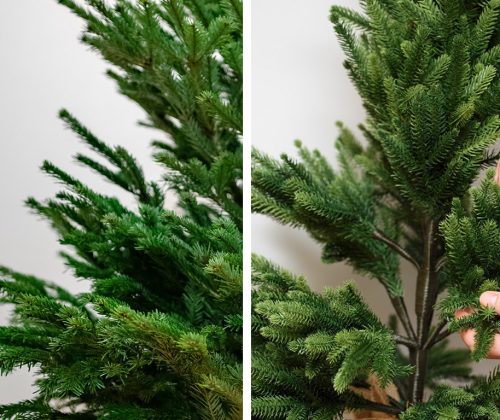
Our Sub-Alpine Firs and Lodgepole Pines are native, wild grown Colorado Rocky Mountain trees that are shipped directly to Fort Collins Nursery after harvest. Sub-Alpine Fir trees have a silvery-blue cast and plump needles while the Lodgepole Pine is covered with cones and has open branching, allowing room for more ornaments.

Our Fraser Firs and Scotch Pines are plantation grown trees. Fraser Firs are very symmetrical, full and have a strong evergreen aroma. The Scotch Pine is the most economical tree, is light weight, and therefore easier to hold up in a stand.

Let one of our wonderful aromatic trees permeate your space this season. With trees starting at just $29, Fort Collins Nursery is sure to help you find just the right tree.

Garden Snakes can be Dangerous… [a comedy]

What follows is an account from a chain email I received from my mother, please take it with a grain of salt. I don’t know where it originated, but it is a good laugh… -Jesse

I didn’t think twice about this tiny fellow on my baby boxwood until I got this letter:

Snakes also known as Garter Snakes (Thamnophissirtalis) can be dangerous. Yes, grass snakes, not rattlesnakes.
Here’s why.

A couple in Sweetwater, Texas, had a lot of potted plants. During a recent cold spell, the wife was bringing a lot of them indoors to protect them from a possible freeze.

It turned out that a little green garden grass snake was hidden in one of the plants. When it had warmed up, it slithered out and the wife saw it go under the sofa.

She let out a very loud scream.

The husband (who was taking a shower) ran out into the living room naked to see what the problem was. She told him there was a snake under the sofa.

He got down on the floor on his hands and knees to look for it. About that time the family dog came and cold-nosed him on the behind. He thought the snake had bitten him, so he screamed and fell over on the floor.

His wife thought he had had a heart attack, so she covered him up, told him to lie still and called an ambulance.

The attendants rushed in, would not listen to his protests, loaded him on the stretcher, and started carrying him out.

About that time, the snake came out from under the sofa and the Emergency Medical Technician saw it and dropped his end of the stretcher. That’s when the man broke his leg and why he is still in the hospital.

The wife still had the problem of the snake in the house, so she called on a neighbor who volunteered to capture the snake. He armed himself with a rolled-up newspaper and began poking under the couch.. Soon he decided it was gone and told the woman, who sat down on the sofa in relief.

But while relaxing, her hand dangled in between the cushions, where she felt the snake wriggling around. She screamed and fainted, the snake rushed back under the sofa.

The neighbor man, seeing her lying there passed out, tried to use CPR to revive her.

The neighbor’s wife, who had just returned from shopping at the grocery store, saw her husband’s mouth on the woman’s mouth and slammed her husband in the back of the head with a bag of canned goods, knocking him out and cutting his scalp to a point where it needed stitches.

The noise woke the woman from her dead faint and she saw her neighbor lying on the floor with his wife bending over him, so she assumed that the snake had bitten him. She went to the kitchen and got a small bottle of whiskey, and began pouring it down the man’s throat.

By now, the police had arrived.
Breathe here…

They saw the unconscious man, smelled the whiskey, and assumed that a drunken fight had occurred. They were about to arrest them all, when the women tried to explain how it all happened over a little garden snake!

The police called an ambulance, which took away the neighbor and his sobbing wife.

Now, the little snake again crawled out from under the sofa and one of the policemen drew his gun and fired at it. He missed the snake and hit the leg of the end table. The table fell over, the lamp on it shattered and, as the bulb broke, it started a fire in the drapes.

The other policeman tried to beat out the flames, and fell through the window into the yard on top of the family dog who, startled, jumped out and raced into the street, where an oncoming car swerved to avoid it and smashed into the parked police car.

Meanwhile, neighbors saw the burning drapes and called in the fire department. The firemen had started raising the fire ladder when they were halfway down the street. The rising ladder tore out the overhead wires, put out the power, and disconnected the telephones in a ten-square city block area (but they did get the house fire out).

Time passed! Both men were discharged from the hospital, the house was repaired, the dog came home, the police acquired a new car and all was right with their world.

A while later they were watching TV and the weatherman announced a cold snap for that night. The wife asked her husband if he thought they should bring in their plants for the night.

And that’s when he shot her.

Eastman: The Aftermath: What to do After Lumber Falls From the Sky

With  all  this  heavy  wet  snow,  I’ve  been  getting  a  lot  of  questions  about  trees.  More  specifically,  what  trees  will  withstand  snow,  and  how  should  I  deal  with  the  damage  my  trees  have  sustained?  The  answer  to  these  questions  is  not  completely  straightforward,  but  I  will  do  my  best  to  keep  it  neat  and  simple.

Generally  speaking,  there  are  certain  tree  varieties  that  perform  well  under  heavy  snow.  These  include  Colorado  Blue  Spruce,  Hawthorn,  Bur  Oak,  Honeylocust,  Kentucky  Coffee  Tree,  and  Linden.  While  these  trees  may  have  seen  some  breakage  in  these  storms,  it  has  generally  been  less  severe  than  Cottonwood,  Elm,  Maple,  Ash,  and  a  host  of  others  that  I  have  piled  by  the  curb.

Equally  as  important  as  good  tree  selection  is  good  maintenance.  I  have  often  heard  people  brush  off  professional  tree  pruning  services  as  nothing  more  than  a  waste  of  money  –  nature  can  take  care  of  itself.  Well,  nature  just  took  care  of  itself,  and  with  devastating  results.  I  have  seen  trees  that  normally  bear  snow  quite  well  –  Kentucky  Coffee  Trees  and  Honeylocusts  –  broken  in  this  snow.  On  the  other  hand,  we  have  several  massive  Cottonwoods  here  at  the  Nursery  that  sustained  no  damage  whatsoever.  The  difference?  Good  pruning  practices.  We  have  our  Cottonwoods  pruned  about  every  2-3  years  by  a  professional  tree  care  company.  It’s  not  cheap,  but  it  kept  our  buildings  safe  and  our  trees  healthy.  I  don’t  want  to  imply  that  preventative  maintenance  can  solve  all  your  troubles,  however  it  can  mean  the  difference  between  a  tree  surviving  a  heavy  snow  with  minimal  damage  or  being  killed  under  a  heavy  snow  and  potentially  damaging  a  house,  a  vehicle,  or  worse,  a  person.

For  shrubs  and  young  trees,  maintenance  is  still  important,  but  there  is  more  we  can  do  to  actively  protect  them  during  the  storm.  Periodically  going  outside  and  gently  shaking  the  snow  off  branches  can  prevent  the  buildup  of  heavy  snow  that  can  snap  limbs  and  bend  trees  to  the  ground.  When  shaking  a  tree  or  shrub,  here  are  a  few  important  tips  to  keep  in  mind:

  • Shake  gently.  Branches  become  brittle  in  the  cold  and  can  be  broken  by  too  vigorous  a  shake.
  • Don’t  hit.  Hitting  branches  with  a  rake  or  a  broom  can  damage  the  tender  young  bark.
  • Don’t  expect  the  branches  to  just  spring  back  upright.  It’s  cold,  and  until  the  air  gets  a  little  warmer,  they  may  remain  a  little  bent  out  of  shape.

Finally,  let’s  talk  about  broken  limbs  and  trunks.  Generally  speaking,  broken  limbs  should  be  pruned  back  to  the  nearest  major  intersection  (Removal  cuts).  This  may  mean  removing  more  of  the  branch  than  just  what  is  broken,  but  this  type  of  pruning  will  have  the  best  long-term  health  results  for  the  tree.  It  is  important  on  large  branches  to  use  the  Three-Cut  Method  to  prevent  further  damaging  the  tree.  Watch  out  for  overhead  power  lines,  and  know your  limits.  Call a professional tree service if needed.

Once  all  broken  limbs  have  been  removed,  examine  the  trunk.  If  it  has  a  split,  there  is  a  slim  chance  of  saving  it  by  bolting  through  the  trunk  to  reconnect  the  two  sides  of  the  split.  While  it  is  certainly  possible  for  the  two  sides  to  grow  back  together,  it  is  unlikely  to  succeed.  Even  if  successful,  this  type  of  repair  typically  only  prolongs  the  life  of  the  tree  6-8  years,  and  will  be  a  weak  point  for  the  duration  of  the  tree’s  life.  If  the  lead  branch  has  snapped,  there’s  not  much  to  do  until  the  tree  starts  growing  next  spring.  If  two  leads  grow  from  the  tip,  remove  one  to  establish  a  new  lead  branch.  Trees  with  a  double  leader  are  far  more  prone  to  splitting  in  snow  than  those  with  a  single  well-established  leader.

I  am  often  asked  if  a  sealant  or  paint  should  be  used  to  dress  the  fresh  cuts  on  a  tree,  and  the  resounding  answer  is  “NO!”  You  can  click  here  for  more  information  on  this  practice,  but  to  sum  it  up,  trees  heal  themselves  very  well,  and  sealing  the  damage  can  actually  impair  the  tree’s  ability  to  self-heal.  Often,  parasites  get  trapped  in  the  wood  by  the  sealant.  Do  not  apply  alcohol  or  other  disinfectants  that  are  used  on  humans.  Trees  are  our  friends,  but  they  are  not  people.  If  you  want  to  apply  something,  the  best  thing  I  can  recommend  is  winter  water  if  the  season  is  dry,  and  a  good  low-nitrogen  fertilizer  in  the  spring.  I  suggest  Jirdon’s  Tree  &  Shrub  Fertilizer,  AgriHouse  O.D.C.,  Super  Thrive,  or  Bayer  Advanced  Tree  &  Shrub  Protection.

In  the  end,  nothing  is  truly  safe  from  snow;  it  is  a  part  of  living  here  in  Colorado  and  Wyoming  and  we  would  be  wise  to  learn  to  live  with  it.  Even  Colorado  Blue  Spruce,  which  seemed  to  go  unscathed  in  these  recent  storms,  were  stripped  of  many  of  their  branches  in  a  blizzard  in  March  of  2003,  and  trees  that  are  notorious  for  breaking  can  be  pruned  and  maintained  to  the  point  where  they  go  untouched  while  their  more  snow-worthy  brethren  snap  and  fail.  I  hope  this  provides  some  peace  of  mind,  or  at  least  some  good  perspective.  All  that  is  left  to  do  now  is  pick  up,  prune,  and  enjoy  the  snow.

Jesse  Eastman

Eastman: First Snow Of The Season: What’s A Gardener To Do?

SnowDrift-PlaygroundWe all know snow will eventually fall, and October is almost always the lucky month that gets to wake up covered in a blanket of white, but speaking for myself, I am never really ready for it. NOAA and the National Weather Service are calling for 7″-13″ from this storm, with Wed., Oct. 26 night lows dipping as low as 13ºF here in Fort Collins. If you’re not ready yet, this doesn’t leave a heck of a lot of time to prepare, which is why I have painstakingly prepared

Jesse’s Fall Cleanup Tips for Procrastinators:

  • Don’t worry about pruning your roses, cutting back perennials, or pulling out your vegetable garden. These things are all very important, but they can wait. The items I have listed below are far more urgent.
  • Rake up as many leaves as you can before it begins to rain/snow. Once moisture comes, these will be a real pain to clean up. The same goes for the processed dog food your furry pal leaves in the yard.
  • If you have any fall flowers that are still looking gorgeous (Mums, Asters, and Pansies come to mind), or fall produce that has lots of life left (think Broccoli, Spinach, Kale, and Cabbage), make a plan to protect them from the elements. These plants are frost hardy, but 13ºF is more than they are prepared to handle. Frost cloth or a cold frame will do the trick, although a 5-gallon bucket will suffice in a pinch. The goal is to trap air around the plants, providing a buffer against the frigid air outside.
  • Examine the trees around your property. Are there any branches that look like their grip on life is tenuous? If you can safely do so, prune them now. Take special care with trees that still are holding onto their leaves, especially if those leaves are still green. These will catch a ton of wet heavy snow, which means the potential for limb breakage is high. Don’t park your car under any of these branches. Some trees that are particularly prone to breaking include cottonwoods, willows, old crab apples (especially if they have diseased limbs), maples, and elms.
  • Disconnect your hoses and drain the water from them.  Broken water pipes are never fun to deal with, much less so when it is cold out.
  • Shut down, drain, and cover any concrete fountains, and cover outdoor pottery to prevent cracking.
  • Send your lawn to bed well-fed and happy with Jirdon’s Winterizer Fertilizer or Alpha Organic Turf Winterizer
  • Wrap up any planting you want to do this fall. We’ve got free moisture on the way, plus it is best to avoid working the soil immediately following precipitation as this can lead to severe soil compaction.
  • If you carved pumpkins for Halloween, bring them inside. Frozen pumpkins will rapidly start to resemble pumpkin pie filling.
  • Dig out that snow shovel while you are still in a good mood and your fingers aren’t numb.
  • Finally, and most importantly, make sure you are stocked up on all your favorite treats. My list includes hot chocolate, Stranahans Colorado Whiskey, wool socks, and a good book.
- Jesse Eastman

Throgmorton: Autumn is Coming

Folks living in the mountains know fall is coming. It was chilly this past week.

Summers go fast in the high country. The last frosts can happen in mid-June. The first fall frosts come as early as mid-August. That is as little as sixty frost free days. Warm season vegetables like tomatoes and peppers don’t grow well in that short of a season. Some annual flowers are just starting to bloom in sixty days.

Cool season vegetables do great in the high country. Broccoli, cabbage, lettuce and salad greens prefer cool temperatures. Try sowing spinach now.  It will germinate in a few weeks. The seedling plants stay dormant through the cold winter. As the temperatures warm next spring the plants grow quickly. They’re ready for an early spring harvest.

Annual flowers seem to glow in mountain plantings. Old stand-bys like petunias, marigolds and zinnias are a blast of color until the first hard frosts. Pansies, snapdragons and dianthus are great for cutting and tolerate frosts. Ageratum, alyssum, lobelia and violas are great cool season accents.

Folks growing shrubs at elevations above 8,500 feet should look for natives. Native birch and alder are large garden accents. Snowberry and thimbleberry are medium sized shrubs. Non-natives to try are the Canadian shrub roses. These roses are on their own root so if they freeze to the ground, the same plant will come back and bloom the next season. With an insulating cover of snow, the roses usually don’t die-back. But watch for mold and rot on the plant as the snow slowly melts in the spring.

Native trees like aspen, spruce and pine are high country mainstays. Crabapples, hawthorns and chokecherries are non-natives to add to the landscape.

This time of year woody plants need to be prepared for fall. If they keep growing, their soft new growth can be nipped in the first freezes. Don’t fertilize trees and shrubs after mid-July. That goes for the lowlands too. Fertilizer pushes soft, new growth. Limit pruning. Pruning stimulates growth. Cut back on water. Less water means less new growth to get nipped. Once trees, shrubs and perennials go dormant keep them moist until the soil freezes.

Summer zips by especially in the high country. Picking the right plants keeps mountain gardens blooming.

Tom Throgmorton, of Throgmorton Plant Management, can be heard on KUNC, 91.5 FM, every Saturday morning at 7:35 and 9:35 a.m.