
By Eri Matsumura
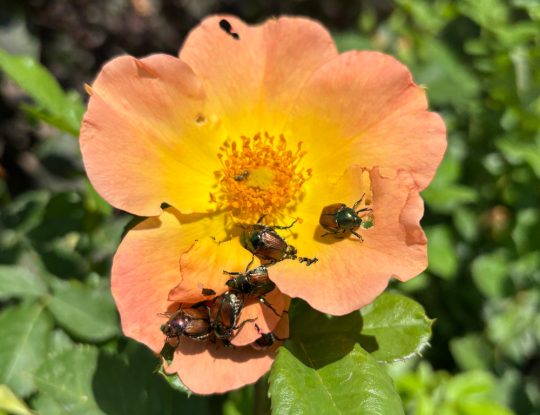
It’s that time of year when we start seeing those pesky Japanese Beetles appear in our yard. Adult beetles will start their feeding from July to August, so it is important to start mitigating them as soon as you see one in your garden. Here are two crucial tips to controlling these pests before you have a shiny invasion in your garden beds.
The first thing you need to have in your gardening arsenal is a bucket of soapy water. Just a hearty squirt of dish soap and then fill the container with water. The beetles are the least active in the early morning, this is the best time to start hunting them. Simply place your container of soapy water under the beetles and just knock them in. The soap in the water is there to break the tension of the water surface and ensure the bugs stay underwater so they drown.
After catching and drowning all the beetles you can find in your garden, the next step you’ll take is to prune out the damaged leaves off of your plant. Once a beetle has started to feed on the leaves, that leaf will start to emit a chemical “calling card” to attract more beetles to that plant. This odor, undetectable to humans, attracts other Japanese Beetles in the area to that specific plant, letting them know there is an “All You Can Eat Buffet” in your yard. This can lead to an infestation that is hard to manage. Once you have pruned the leaves off, throw them away in a plastic bag in your garbage, do not compost as the odor will continue to spread.
The most important practice to Japanese Beetle control is to go out and check your plants frequently, if not daily for these pests. Check plants that are fan favorites like roses, grape vines, and fruit trees. Killing a couple insects a day while snipping off some of the damaged leaves will save you the trouble of dealing with an infestation later. Take your cup of coffee out and make this a part of your morning routine. If you don’t have time for daily checks, think about involving (bribing) your kids, maybe a dime per drowned bug. Hopefully you’ll have a beetle free yard for about five bucks.
Two common myths and two mistakes for Japanese Beetles control:
There is a common myth that you can’t squish the beetles, but you definitely can. Japanese Beetles do not release an alarm pheromone like other insects can. So if you see one on the ground, stomp away!
Another myth is that white flowers attract the most beetles, this is not true and the beetles don’t have a preference on flower color. Wouldn’t that be pretentious of the invasive pest?
A common mistake some gardeners will make is to set up a Japanese Beetle trap in the yard. While it does lure, trap and kill the beetles in the area, the trap can end up doing more harm than good. These commercial traps can end up attracting more beetles than it can capture into your yard making a small problem into a larger incontrollable one. One study done by the University of Minnesota found that traps lead to more plant damage in the areas they have been placed. Another study done by the USDA estimates that only 75% of beetles attracted to the trap end up in the trap, so you can be drawing larger numbers of the beetles into your garden while only capturing some of the population. These traps are primarily intended to be used to gauge local beetle populations, not for population control.
Another common mistake made is broadly spraying pesticides all over the insects and plants. While most chemical pesticides can kill these beetles, it can also harm the beneficial bugs in your yard. Pesticides can kill important pollinators, especially native bees and butterflies. Pesticides can also kill valuable predatory bugs like mantis and ladybugs. As of right now, there are no insecticides that exclusively kills the adult Japanese Beetle, so it’s best to avoid using pesticides.
At the end of the day, be mindful that Japanese Beetles are very unlikely to kill a well established and healthy plant. Most damage is going to be purely cosmetic. If the beetles are killing your plant that means the plant was already weak and unhealthy, a target. By ensuring your landscape is receiving proper water and fertilizer and frequently completing two simple chores of drowning the beetles and pruning damaged leaves, you can easily maintain a healthy garden!
Originally published on July 25th, 2025.