By Laurel Aiello
As winter descends upon the Front Range, you might find yourself longing for warmer weather and the solace of the garden. And yet the cold months also offer plenty of ways to connect with nature indoors. From building plant shelves to creating terrariums, here are some projects that will help you liven up your space while the snow falls outside.
Make DIY planters
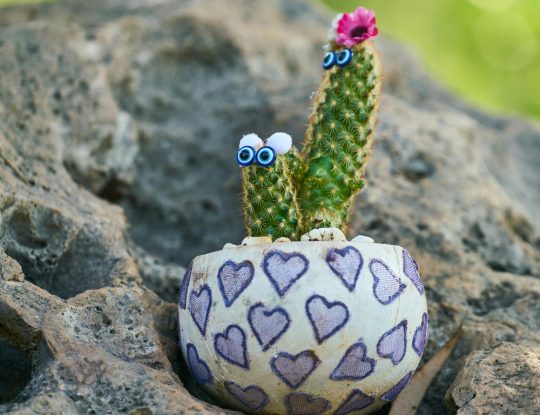
Plants don’t have to live in pots: They can be equally happy in a repurposed mason jar, cinder block, aluminum can, plastic bottle or vintage spice tin. See what you can find at your local thrift store and put your own spin on it by drilling a drainage hole (if possible) and decorating the outside of the container.
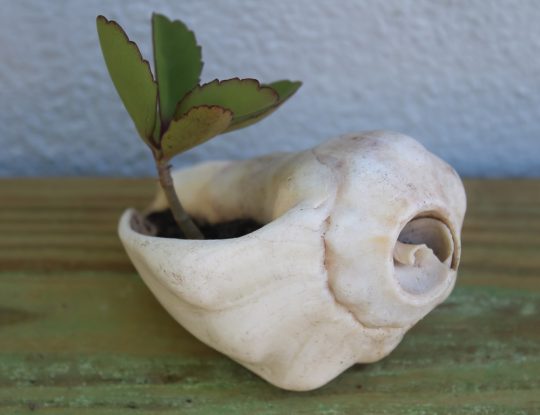
Spray paint, acrylic paint and chalk paint work well on most surfaces (consider using a primer first), and Mod Podge can be applied over pieces of paper or dried flowers to make a water-resistant collage. You can also nail pieces of wood together to create a DIY wood planter box, adding a plastic liner to minimize the mess if kept indoors. The same goes for upcycled wicker baskets—or you can use them as cache pots to hide plain pots with drainage trays. Even patterned tiles can be glued together to make a container for your plants.
When designing DIY pots and containers, think about what you will plant in them. Will they hold succulents and cacti? If so, their shallow root systems will benefit from a short planter. If you’re making a pot for a philodendron, shefflera or another houseplant with a beefy root system, consider using something taller and sturdier, like a painted cinderblock. If you’re simply putting stem cuttings in water, use glass jars or test tubes to create a DIY propagation station at home. Anything can hold a plant if you get creative.
Build a terrarium
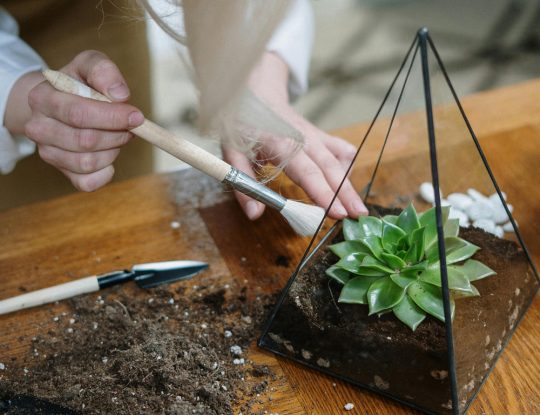
Terrariums allow you to design miniature landscapes indoors with minimal maintenance. Choose a closed or semi-open glass container for plants that need high humidity and damp soil (such as carnivorous plants, ferns and moss), or opt for an open glass container for plants that need a drier environment (especially succulents and cacti). Pair species with similar care requirements and soil types, and adjust your watering frequency accordingly.
Once you’ve chosen your container and plants, place a layer of charcoal at the bottom of the glass for drainage, pour in your potting soil and arrange your plants. Then add decorative elements—think colored pebbles, crystals, bark and small figurines—to make a world of your own. Fort Collins Nursery has a wide range of fairy garden accessories to complete any terrarium, from tiny frogs and gnomes to bridges, toadstools and cottages. See our fairy garden design tips here.
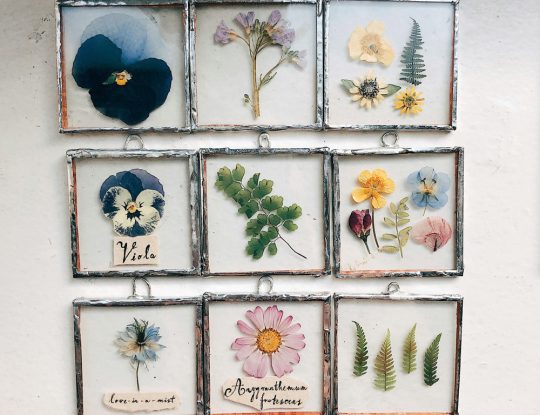
Create art using pressed flowers and leaves
Pressed flowers and foliage make for sustainable art supplies that can be used in collages, on handmade greeting cards and in picture frames on the wall. Start by collecting blooms that retain their shape and color when pressed, like pansies, cosmos, daisies and baby’s breath. Also gather interesting foliage from different types of ferns, eucalyptus and lavender for added variety.
Place the flowers between two sheets of parchment paper, making sure they don’t overlap. Sandwich the parchment sheets in between two pieces of thick paper or cardboard (cut up paper grocery bags work well) and slide the entire stack in between two flat pieces of wood. Weigh it down with something heavy and store it in a warm, dry spot for a minimum of two weeks, periodically changing out the paper to minimize moisture. Pro tip: Make your own flower press using two flat pieces of wood, four carriage bolts, four wing nuts and four washers, then place the layers of cardboard and paper inside and tighten.
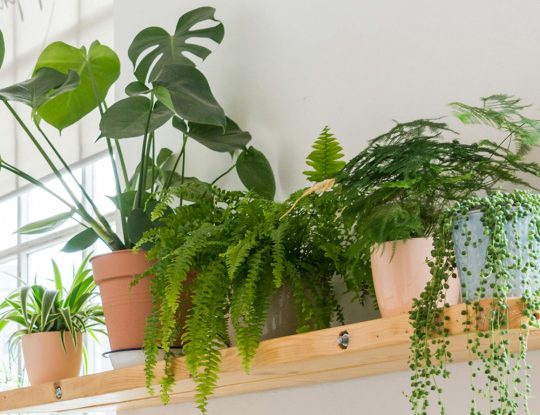
Build a plant shelf
If you’re handy, you can save a lot of money by building your own plant shelves using scrap wood, brackets and screws from the hardware store. Cedar and redwood are ideal for outdoor shelves due to their rot and insect resistance, while pine, poplar and certain types of plywood offer paint-grade options for indoor shelves on a budget. Hardwoods, like oak and walnut, are stronger and don’t need to be painted or stained (they do need a protective clear coat), though they are more expensive. If you want the look of hardwood without the added cost, try staining a piece of pine wood with a walnut, espresso or oak color.
First, sand your chosen wood in the direction of the grain with a coarse-grit sandpaper, then polish it off with a fine-grit sandpaper until smooth. Use latex or acrylic paint to give it character (or a wood stain), then finish it with a polyurethane spray to protect the wood from moisture. Attach the brackets to the shelves and hang them on the wall by screwing them into studs. Style the shelves with potted plants, vases, candles and other decor, making sure to keep water from spilling onto the shelves. It’s best to set any pots with a drainage hole on a water tray, even if they are kept on a shelf with a lip.
For more fun plant crafts and activities to keep you busy this winter, keep an eye out for our upcoming blog posts. You’ll find lots of creative ideas, helpful plant tips and more at fortcollinsnursery.com/category/fcn-blog.
Originally published on December 31st, 2025.