By Alex Tisthammer
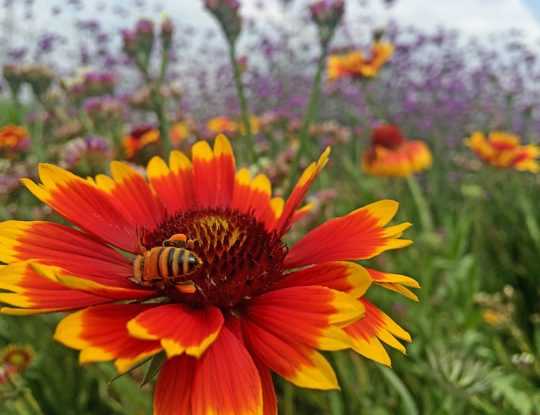
When Fort Collins Nursery began growing natives in 2024, we quickly recognized an opportunity to be part of a movement in Colorado, a shift towards growing and selling native plants. We also learned what many growers before us have discovered – producing Colorado natives is, to put it lightly, difficult.
Colorado has a wide diversity of vegetation zones, which means native plants have had to adapt to a broad range of soil, exposure, sunlight, and moisture conditions. This environmental diversity is not easily reproduced in a production nursery setting. Native plants have adapted to these conditions over eons, and replicating them in a nursery setting is no small task. Once the process is honed in, however, the outcome fills an important need for Front Range gardeners: plants that are available as-needed that are naturally well-suited to our unique climate.
As our climate becomes hotter, drier, and more unpredictable, non-native plants often struggle, making them vulnerable to disease and pests. On the other hand, native plants are built for these conditions, and they are generally more resilient to pest and disease issues while thriving with less water and maintenance.
I recently spoke with our production specialist, Jake Ritter, about some of the unique challenges of growing native species. One of the foundational challenges is simply finding enough seed and plant material to grow at scale. Most of our seed is purchased from Western Native Seed, but availability is limited, we may pivot and look to other sources including Alplains, Prairie Moon Nursery and Granite Seed. We even harvest our own material when supply is impossible to buy. For example, when we couldn’t acquire Fernbush seed, we sought out specimens in local landscapes where we could take cuttings for propagation. Sourcing from multiple suppliers and getting creative allows us to maintain a more diverse selection.
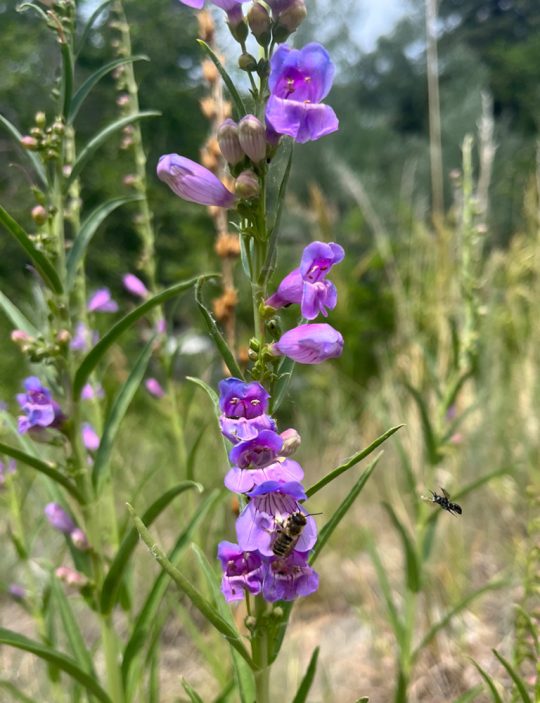
Another challenge is seed preparation, also known as stratification. Different species often require very different treatments. Most penstemons, for instance, need their seed to be kept cold and moist for one to three months before they’ll germinate. Others, like Showy Fleabane (Erigeron speciosus), don’t need any pre-treatment at all. Some plants require multiple steps and stages. Boulder Raspberry (Rubus deliciosus), and Woods Rose (Rosa woodsii), both need a warm, moist period followed by a cold one. Managing this complex web of conditions requires careful planning, organization, and timing to ensure plants are ready for the upcoming growing season.
Although it’s a demanding process, it’s worth it for the end result: a wide range of regionally appropriate natives that you can’t find anywhere else.
Enthusiasm for these plants isn’t just a passing fad – it’s being reinforced by policy. Over the past decade, multiple laws have been passed in Colorado to encourage water-wise landscaping. Residential rain barrels were legalized in 2016. HOAs are prohibited from banning xeriscaping or drought-tolerant landscaping. Colorado’s lawn replacement bill allocated $2 million to encourage residents to replace irrigated lawns with low-water plants. HOAs are now required to provide homeowners with at least three approved water-wise garden designs, while also limiting restrictions on vegetable gardens and the use of non-essential turf. A new law has gone even further, banning non-essential turf, artificial turf, and invasive plants in many commercial and public spaces, including apartments and condos. Taken together, this collection of legislation demonstrates that landscapes in Colorado are evolving, a shift that feels particularly relevant on the tail end of one of our warmest and driest winters on record.
This is behind our Native Starter program. From both a practical and legislative perspective, native plants represent the future of landscapes in the Rocky Mountain West, and we’re here to help.
This doesn’t mean your entire yard needs to be native plants. After all, a rich and layered tapestry of plants is what makes a garden beautiful. However, natives offer more than aesthetics – they play a key role in supporting the insects and animals that make the world go around in ways that are so often unnoticed. Adding even a few natives into our yards can make a difference, enhancing the ecosystem in vibrant and colorful ways while conserving water and resources.
As it stands now, the “ideal” Colorado landscape is changing. Less traditional lawns. More biodiversity. More plants that evolved to thrive here. More resilience built into the landscape from the ground up.
Originally published on March 2nd, 2026.