
By Shannon Moreau
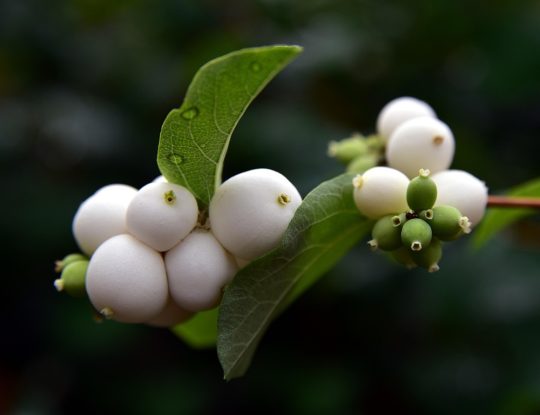
It is uncommon to find a shrub for the landscape as versatile as Symphoricarpos, which includes both snowberry and coralberry. Their ability to not only grow but thrive in a wide range of light conditions and soils makes it an ideal option for gardeners dealing with tricky locations. Given all their grit and adaptability, both the coralberry and snowberry are underutilized! It is high time to highlight the wonders of these tough and beautiful shrubs and explore ways to incorporate them into your landscape.
In case you are unfamiliar with this shrub, snowberries and coralberries are members of the family Caprifoliaceae, which also includes honeysuckles and the Seven Sons Flower. Many plants in this family sport showy flowers and produce either a berry or drupe after flowering. The white-fruiting species are commonly referred to as snowberry, while pink-fruiting varieties are called coralberry. There are multiple showy cultivars that have been bred for their fruit, but also several which are natural and native to Colorado. Symphoricarpos albus (Common Snowberry), and Symphoricarpos occidentalis (Mountain Snowberry) are two found throughout Colorado. In their native range, they can be seen nestled in among herbaceous perennials and young trees in the understory. The leaves and fruit of common snowberry serve as an important food source for birds, deer, native bees, and even bears. While it might look tasty to us, the fruit is unfortunately inedible for humans.
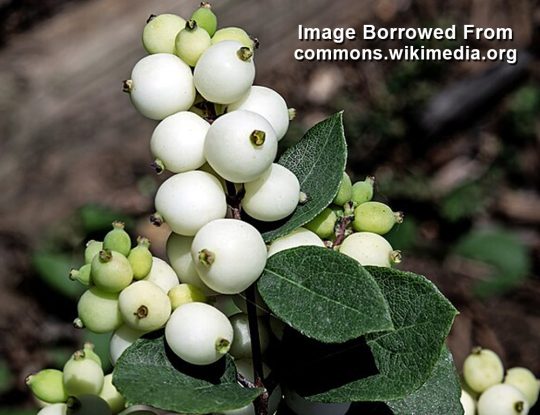
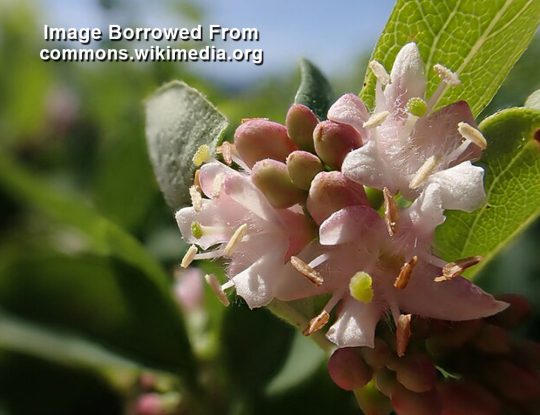
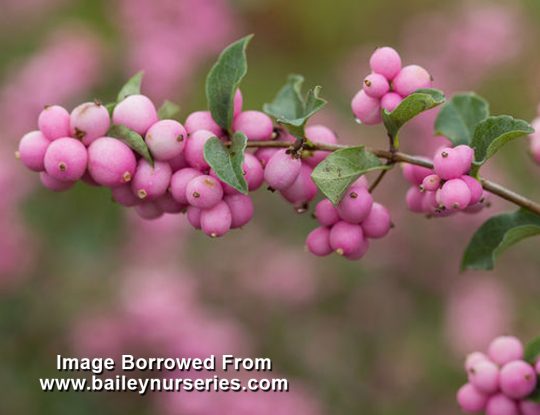
Whether you are planting native species or non-native cultivars like ‘Candy’ Coralberry, the ornamental features of this species shine across all varieties. Snowberries and coralberries have small bell-shaped flowers, long arching branches, and round blue-green foliage. Most cultivars bloom in late spring, providing a lovely option for bees and other pollinating insects. Several weeks after the pollinators have visited, large showy fruit begin to develop. Once they have matured, the branches cascade down, heavy with fruit, creating a charming semi-weeping habit, making it my absolute favorite time of year! The arching shape and texture these shrubs create as their fruit develops add a whimsical touch to the landscape.
In the landscape there are a few different ways to incorporate snowberries and coralberries. Most will mature with a height and width of 2 to 4 feet. While consistent watering is necessary during the first few years in the landscape, these shrubs will be drought-tolerant once established. With that in mind, dry shade is a great place to start, which is similar to the shady pockets of the understory where they grow naturally. They perform best in locations where they can get a break from our hot sun, but both the snowberry and coralberry can adapt to varying light conditions, from full sun to dense shade. Their dense, semi-arching habit is easy to integrate into many designs, but they also look lovely en masse as a low border or sprinkled throughout a meadow-inspired landscape. Quick to establish, studies on forest restoration show that the common snowberry is one of the first shrubs to reestablish after wildfires, making it an excellent option for firewise landscaping.
These often-overlooked shrubs have so much to offer in the landscape, functioning as a skeleton key for tough locations in many designs while also standing alone beautifully. I encourage you all to incorporate a snowberry or coralberry into your next landscape design!
-McWilliams, Jack. 2000. Symphoricarpos albus, common snowberry. In: Fire Effects Information System, [Online]. U.S. Department of Agriculture, Forest Service, Rocky Mountain Research Station, Fire Sciences Laboratory (Producer). Available: https://research.fs.usda.gov/feis/species-reviews/symalb
Originally published on March 30th, 2026.