By Shannon Moreau
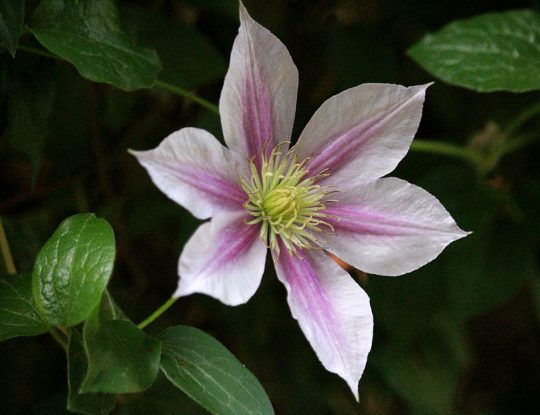
July brings an explosion of color to the landscape and is an excellent time to enjoy the flowers of Lilies, the first round of Coneflowers, and Hostas. It’s also a great time for one of my favorites, Clematis! This garden staple offers bursts of color in a wide variety of conditions and heights. As spring blooms wind down and the second round of flowering begins, it’s the perfect time to feature this incredible perennial plant.
Clematis is a member of the buttercup family Ranunculaceae. Other members of this family include Anemones, Ranunculus, and Delphiniums. Vining clematis are the most common form but there is a lovely group of compact “bush” forms that can be incorporated into the landscape. The ideal conditions for each can be easily met, they need moderate water and can grow well in full sun and part shade. Several varieties can even perform well in dappled to dense shade. Vining clematis perform best if the roots stay cool, so plant a short herbaceous perennial at the base of your vine to shade the root zone.
Maintenance for clematis is fairly easy and fortunately straight forward. Outside of pruning, clematis benefit from regular fertilization in the early spring. You can continue fertilizing them until they start to bloom, then sit back and enjoy the show. For pests, aphids occasionally visit clematis, but the one to look out for is the gray blister beetle. While they do not go after all clematis species, if left to their own devices these gray bodied beetles can defoliate a plant. Fortunately they can be controlled by knocking them into a bucket of soapy water. Even if you miss a few of these beetles, clematis are tough and can bounce back with routine watering and an application of a mild fertilizer like kelp.
Clematis are separated into pruning groups. These groups are defined by when and how they should be pruned based on when flowering occurs and whether they will set flower buds on old or new wood. The blooming season for clematis is dependent on these groups, but by and large they will bloom from June through September.
Pruning Group One
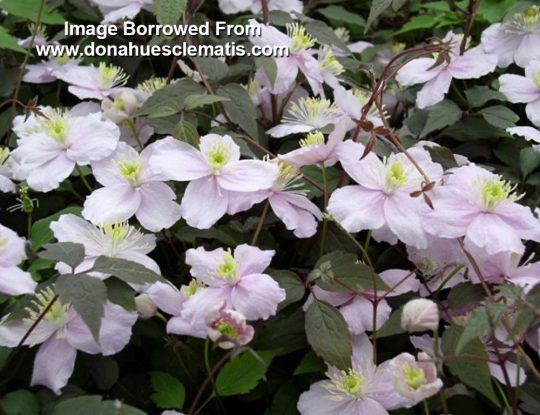
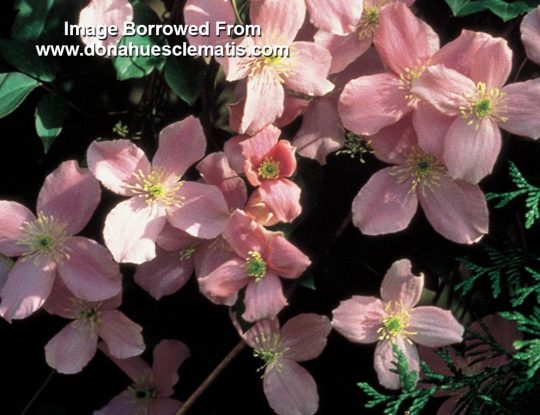
Group One clematis are early flowering cultivars that bloom on their old wood and need very little pruning each year. Ideally, wait until they have finished blooming, starting with the removal of anything dead or damaged. Next, prune stems that are overgrown and hanging down to the ground or resting on another woody stem.
Clematis montana, Clematis macropetala, and Clematis alpina are hardy species in this category ideal for Northern Colorado. The flowers on each of these species are small but profuse, creating an explosion of color in the early spring. Popular cultivars in these two species include ‘Montana Mayleen’, ‘Montana Rubens’, ‘Blue Bird’ and ‘Blue Dancer’.
Pruning Group Two
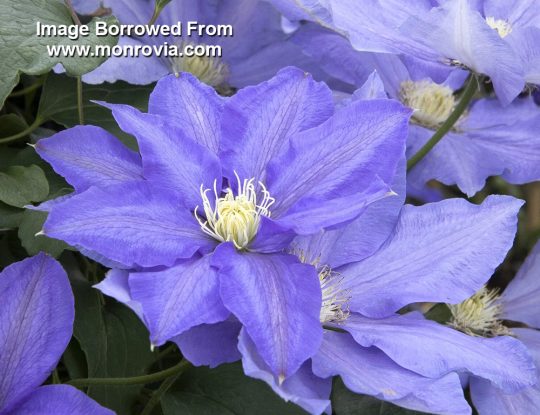
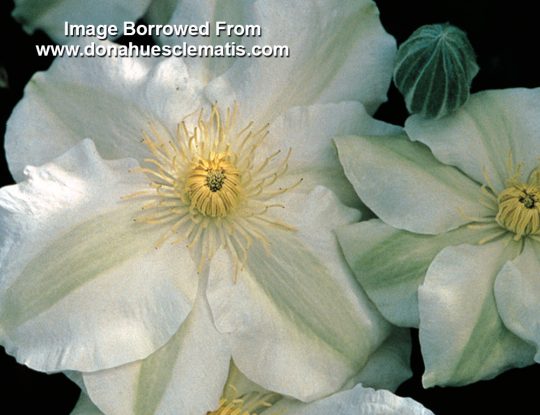
Group Two varieties bloom on old wood like Group One, but can then rebloom in late summer on new growth. This group boasts a large range of varieties and cultivars with many colors and exceptionally large flowers that bloom late spring into the summer. Overall these clematis need little pruning. Dead and damaged stems can be removed in the late winter or early spring, followed by a light pruning after the first round of flowers are spent. This will feel similar to deadheading, where you simply cut back your flowers to the next set of buds. This process encourages new flower buds to grow and lightens the load for the vines themselves.
There are quite a few series within this pruning group so cultivars under the Boulevard series or the Fragrant Star series are sure to be knock-outs in the garden. A few of my favorites outside of those series include ‘H F Young’ and ‘Guernsey Cream.’
Pruning Group Three
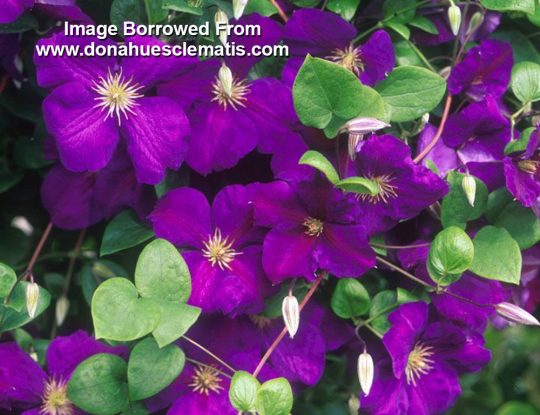
Pruning Group Three requires the most pruning as they bloom exclusively on new growth each season, so they need to be cut back to about 6 – 12” in the late winter or early spring. The plants in this group offer a wide array of growth habits so many can be grown as a rambling perennial, or they can be trained up a structure as a traditional vine. Once their new growth emerges they are vigorous growers. If they are being trained onto a structure, make sure you keep an eye on them to tie or train stems on a regular basis. Many of the cultivars in this group are repeat bloomers, offering a nice display of flowers from spring to fall. The flower shape and size varies widely in this group so it offers some truly unique options!
‘Jackman’ clematis is often one of the first cultivars that comes to mind for a reliable vining perennial, and for many gardeners it is the first clematis they are introduced to. It is incredibly hardy and puts out a beautiful display of purple flowers with bright yellow centers from June through September. While ‘Jackman’ might be the superstar of this pruning group, other exceptional cultivars include ‘Roguchi,’ ‘Princess Diana,’ ‘Acropolis,’ and the fall bloomer ‘Sweet Autumn.’
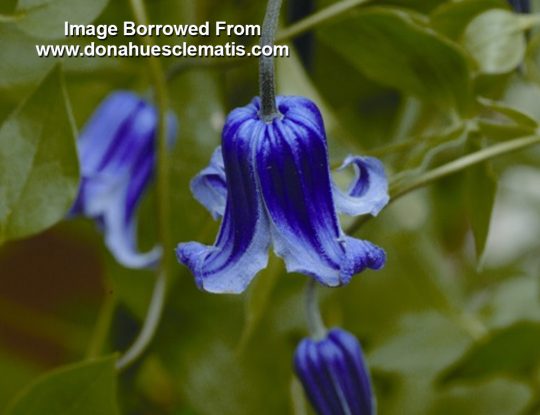
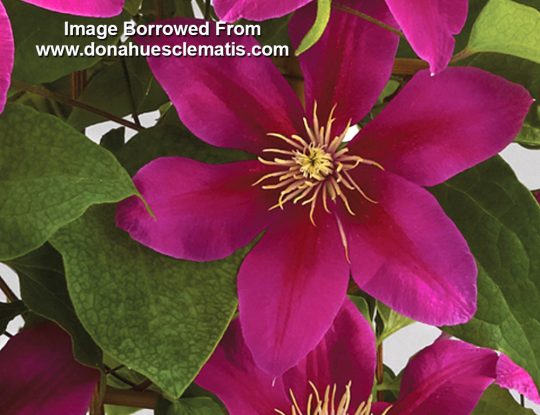
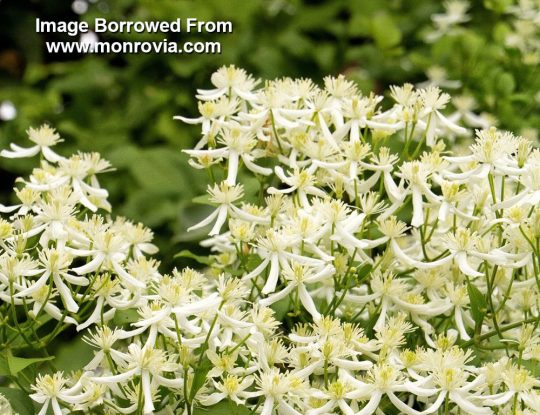
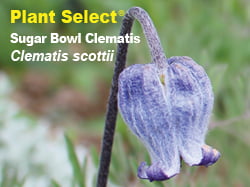
Finally, there are the Bush clematis. These are an excellent addition for perennial borders and statement plantings. Like other herbaceous perennials, they die back to the roots each season so the stems can be pruned in the late fall after they have gone dormant or in the early spring as new growth emerges. The majority of the varieties have blue or purple flowers, but the white flowering ‘Mongolian Snowflake’ is a great option. Each cultivar of bush clematis has a slightly different growth habit. ‘Stand by Me’ is known for its rigid stems and compact form while the long stems of ‘Mongolian bells’ will cascade and create a small mound. For a very unique shape and habit look no further than ‘Scott’s Sugar Bowl.’ The thin gray-green leaves and urn shaped flowers are show stopping.
If you do not already have clematis in your gardens I hope this has inspired you to try one or add a new cultivar into your perennial beds!
Originally published on July 1st, 2026. Updated on July 8th, 2026.