
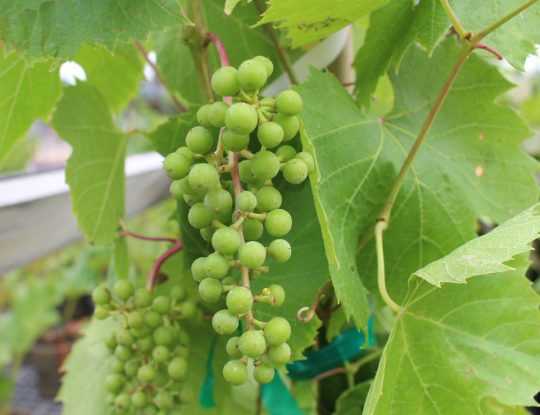
Fort Collins Nursery has a broad selection of small fruit vines and bushes, with dozens of popular varieties like blackberry, blueberry, rhubarb, raspberry, and grape, plus some of the less common varieties like currant, goji berry, haskap berry, and serviceberry.
There are many mouth watering reasons to add small fruits to your garden landscape. They produce beautiful blooms and fragrance as well as a bounty of delicious edible fruits to snack on throughout the summer. They not only taste better than most store-bought fruits but they can save you money during peak season pricing as well. You’ll also take pride in the fact that you grew them all by yourself!
No disrespect to fruit trees, but small fruits do offer some advantages over their larger relatives. Most fruit trees produce their fruit in the fall and require some patience to reap the rewards until harvest time. On the other hand, you’ll be able to snack on most small fruit and berry varieties all throughout the summer months. Fruit trees require a large space to grow but you don’t need a large yard or an orchard to grow small fruits. Berry plants are small enough to look suitable in any size yard and if space is extremely limited, you can try growing your fruit in patio containers as well. Vining fruit varieties like grapes, hops, and kiwi take up more space than most berry bushes and require some training. However, keep in mind that much of the space needed is vertical space which is usually plentiful and under-utilized in most garden designs.
Fort Collins Nursery has over 80 small fruit varieties in stock and here are a couple of tasty examples for you to try:
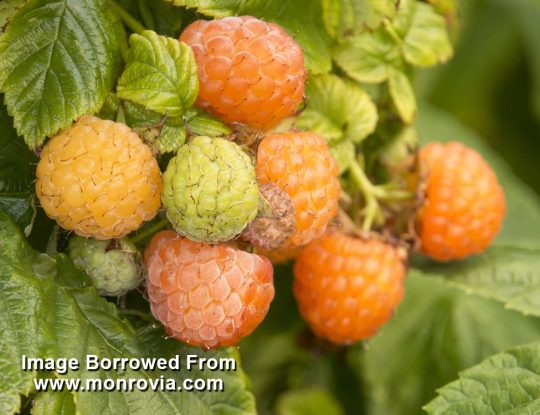
Fall Gold Raspberry
Rubus idaeus ‘Fall Gold’
Fall Gold is an everbearing raspberry that produces large, golden berries with the same deliciously sweet flavor as red varieties. The berries are excellent fresh or used in preserves and pies. Plants produce two crops each season: a light spring crop followed by a heavy harvest from August to frost. Fall Gold is self-pollinating, very vigorous, and highly productive.
- Height: 3-5 ft.
- Width: 5-7 ft.
- Water: Average to low
- Zones: 3 – 8
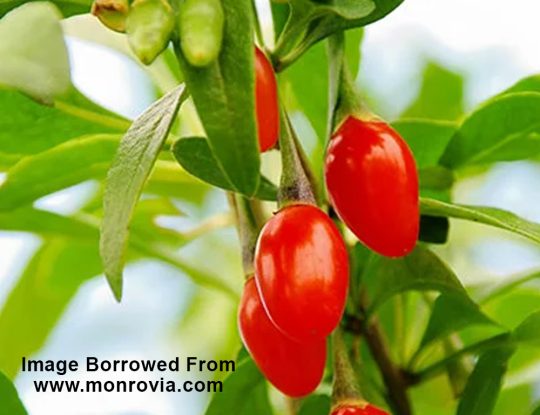
Goji Berry
Lyicum barbarum
Goji berries are self-fruiting plants that feature delicate, purple, trumpet-shaped flowers in early summer, followed by bright orange edible berries. Goji berries are among the most nutrient-dense fruits, containing amino acids and many essential vitamins and minerals. They are popular as a dried snack but can also be eaten fresh or juiced. Their long, vine-like branches can be trained onto a trellis for easier harvesting or allowed to grow naturally.
- Height: 3-4 ft.
- Width: 3-4 ft.
- Water: Moderate
- Zones: 5
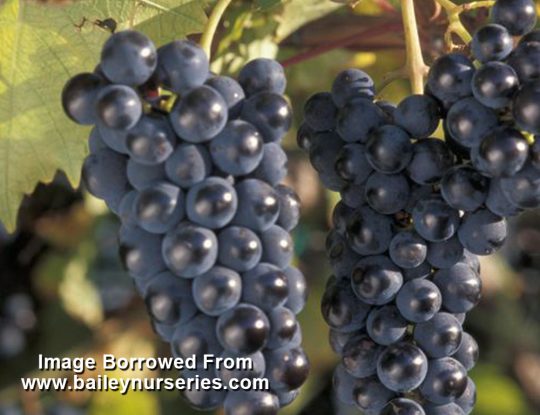
Marquette Grape
Vitis ‘Marquette’
Marquette Grape is a red wine variety that combines extreme cold hardiness and disease resistance with excellent wine quality. Tasters note its attractive deep red color, with aromas of cherry, black pepper, and spice. Its open, orderly growth habit is highly desirable for efficient vineyard management. Vines are self-pollinating and will produce fruit with just one plant.
- Height: 10-20 ft.
- Width: 5-10 ft.
- Water: Average to low
- Zones: 3-8

Jersey Knight Asparagus
Asparagus officinalis ‘Jersey Knight’
This hardy and prolific all-male strain produces a consistent bounty of large, tender, delicious spears. Its tall stalks can yield up to 3-4 times more asparagus than other varieties. Jersey Knight is a rust resistant variety that performs well even in our heavy clay soils.
- Height: 4-5 ft.
- Width: 12-18 in.
- Water: Moderate
- Zones: 3-8
Originally published on August 6th, 2019. Updated on May 1st, 2026.